

期刊發表
Clinical outcomes of intratumoural para-toluenesulfonamide treatment in equine melanoma
新發表馬病黑色素瘤治療結果
研究結果發表於BEVA Online Library CaseReport
Summary
Equine melanoma is one of the most common cutaneous neoplasms in horses and is particularly prevalent in grey horses. Although these tumours often demonstrate indolent biological behaviour, some progressively develop locally invasive or malignant characteristics over time, making treatment decisions challenging in clinical practice. This case series describes the clinical outcomes of intratumoural para-toluenesulfonamide (p-TLS) treatment in seven horses with cutaneous melanoma managed under field conditions. Seven horses with histopathologically confirmed melanoma were treated with intratumoural p-TLS at approximately weekly intervals, and tumour response was assessed through clinical examination, tumour measurements and serial photographic documentation. Clinical complete response was achieved in six of seven horses, while one horse showed partial response. Local tumour necrosis and sloughing developed in all cases and were followed by progressive wound healing. Mild treatment-related adverse effects, including transient local inflammation and reduced appetite, were observed but were self-limiting. Follow-up duration ranged from 107 to 765 days, with one case of local recurrence. Intratumoural p-TLS appeared to provide effective local tumour control and was generally well tolerated. This minimally invasive approach may represent a practical treatment option for equine melanoma, particularly where surgical management or referral-based treatment is not feasible. However, these findings should be interpreted with caution because of the small sample size, absence of a control group and variable follow-up duration.

PTS治療馬腫瘤結果於2026世界馬科獸醫年會發表
PTS治療馬腫瘤結果 於世界馬科獸醫年會發表
旗下動物靶向腫瘤消融新藥PTS試驗品「GWA106」治療「馬」腫瘤的臨床研究結果摘要獲得 2026 年世界馬科獸醫學會 (World Equine Veterinary Association,WEVA)審查通過並將進行發表,本研究結果將提供 PTS 治療馬匹腫瘤的安全性和有效性的寶貴數據。
全球馬匹總數約達 6,000 萬隻,每年約有 60 萬隻馬匹被診斷出新生腫瘤,形成一個估計價值 1.8 億美金的潛在治療市場。
然而,馬匹的腫瘤治療具有高度的特殊性與挑戰性。傳統療法如放射治療、冷凍治療或電化學治療,常因副作用而影響馬匹的行走、進食或排泄能力,顯著降低其生活品質。
而外科手術切除,尤其是當腫瘤位於特定部位時,更突顯了大型動物醫療的困境。這類手術必須在專為大型動物設置的開刀房中進行,並經常需要動用工業級的吊重器械(如起重吊掛系統)來移動或固定馬匹。這不僅對手術環境和設備有極高的經濟要求,更對馬匹本身帶來巨大風險,包括全身麻醉的併發症、以及吊掛移動過程中可能造成的二次傷害。
相較之下,PTS 治療提供了突破性的解決方案。其採用精準的「局部施作」與「腫瘤內注射」方式,可直接針對病灶進行治療,無需進行大型侵入性手術。此優勢大幅降低了對馬匹全身的負擔、麻醉風險以及對昂貴手術設施的依賴,可望在有效治療腫瘤的同時,最大程度地維持馬匹的生活品質,精準滿足此一特殊的臨床需求。
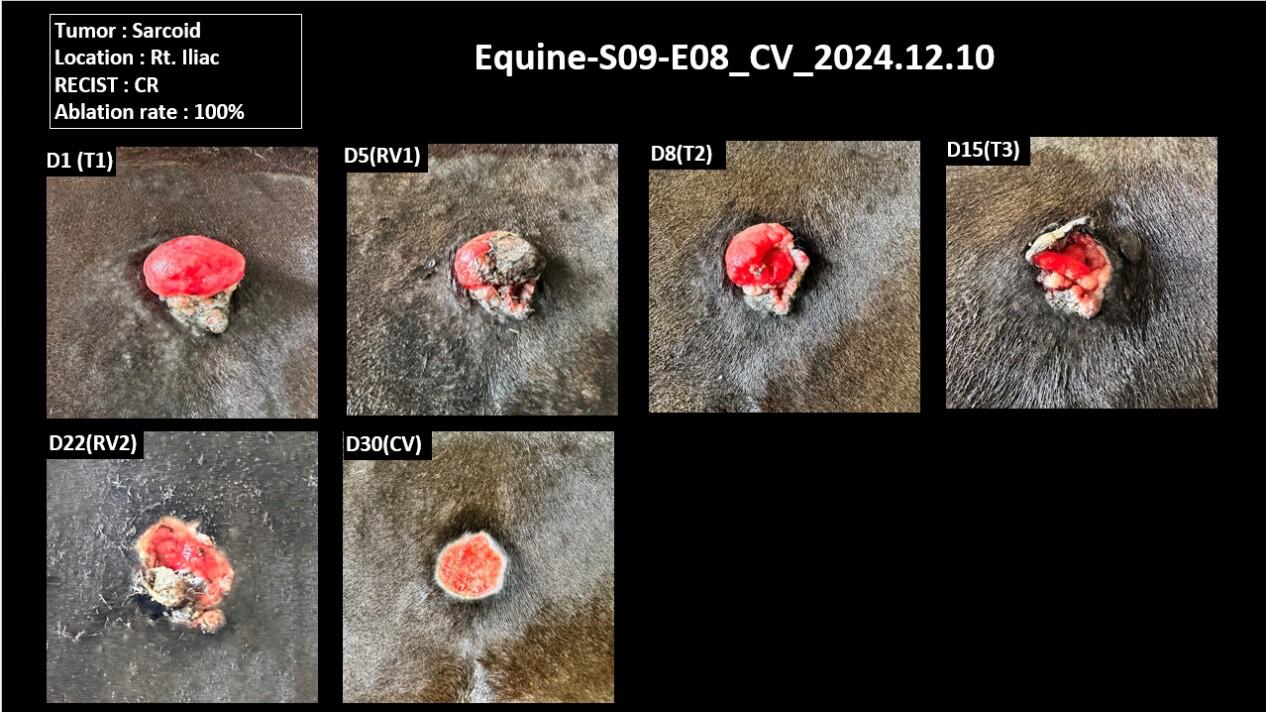
目前已治療 12 隻馬皮膚表淺腫瘤,包含黑色素瘤、肉瘤、鱗狀上皮細胞癌,其相關臨床結果於WEVA 2026 年會發表。
PTS治療馬腫瘤結果
發表
Intratumoral para-toluenesulfonamide as a tumor-ablative therapy for equine cutaneous tumors: a case series of three horses
Publication link ScienceDirect
~~雖然多數馬匹的皮膚腫瘤生長速度較為緩慢,但仍存在惡性轉移或局部擴散的風險。若未及早處理,腫瘤持續生長,可能在騎乘或活動時造成馬匹不適,影響動作流暢度,甚至影響日常生活與情緒。
當腫瘤逐漸增大或向深層組織發展時,可能與筋膜組織沾黏,或壓迫周邊組織與器官,使後續治療的困難度明顯提高。不僅治療範圍可能擴大、傷口較大,馬匹年齡增加也可能提高治療風險。因此,若發現馬匹皮膚出現不明原因的腫塊,建議及早進行檢查與評估。
本次臨床試驗期間,所有個案均接受完整評估,包括:
- 理學檢查
- 血液檢查
- 腫瘤病理確診
- 腫瘤大小與狀態評估
目前共有 11 例個案完成療程,包含:
- 黑色素瘤(Melanoma):7 例
- 肉瘤(Sarcoma):3 例
- 鱗狀上皮細胞癌(Squamous Cell Carcinoma):1 例
相關研究結果與後續分析將持續整理,期望能為馬匹皮膚腫瘤的治療提供更多臨床參考與科學證據。